- 1. FAA opened SAM.gov bids for AI air traffic system handling 50,000 daily flights.
- 2. Delays cost $33B yearly; system targets 10-15% reductions (FAA, 2024).
- 3. BTC falls 2.3% to $75,228; Fear & Greed at 27 (CoinGecko).
FAA opened SAM.gov bids in October 2024 for its FAA AI air traffic system.
Machine learning forecasts trajectories for 50,000 daily U.S. flights, slashing delays 10-15% and saving airlines $33 billion yearly (FAA.gov, 2024).
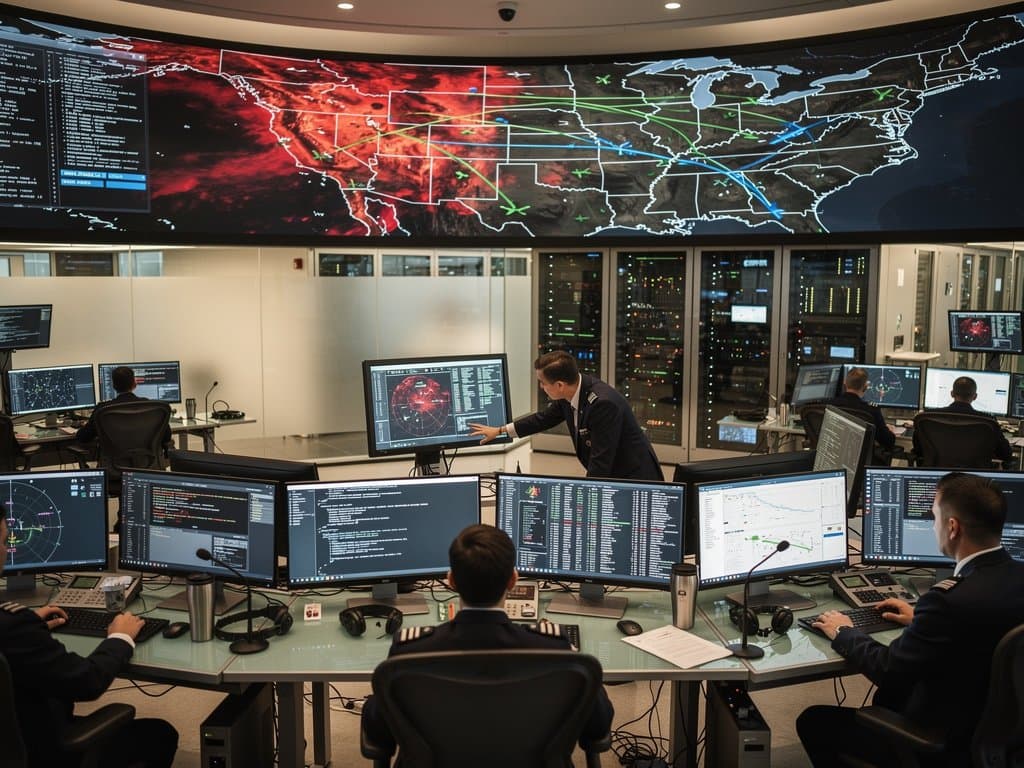
Radar screens thrum in FAA control centers. Blips race across displays as AI overlays pulse with predictive paths.
Explore FAA's AI initiatives here.
How FAA AI Air Traffic System Works
The FAA AI air traffic system processes radar, ADS-B, and weather data in real time. Neural networks predict paths 20 seconds ahead. Controllers see suggested reroutes.
Humans hold final authority. The system flags risks faster than manual spotting (Bloomberg, Nov 2023). Pilots confirm via radio.
Edge computing runs on-site models trained on historical data. Cloud backups deliver 99.99% uptime (FAA NextGen, 2024).
Airline Economics: $33 Billion Delay Costs Targeted
U.S. flight delays cost airlines $33 billion yearly in fuel, crew, and compensation (FAA, 2024). The FAA AI air traffic system tightens spacing at Atlanta and O'Hare.
Carriers cut holding during wind shear. Fuel savings hit 5% per flight on peaks—$3.50/gallon at current prices (EIA.gov, Oct 2024). On-time gains unlock DOT bonuses, lifting revenue 2-3%.
Practical Info: FAA AI Air Traffic System Impact
- Aspect: Daily Flights · Details: 50,000 U.S. (FAA, Oct 2024)
- Aspect: Annual Delay Cost · Details: $33B USD (FAA 2024)
- Aspect: Projected Cuts · Details: 10-15% (FAA)
- Aspect: Bids Platform · Details: SAM.gov (open Oct 2024)
- Aspect: Booking Tip · Details: Flighty app ($49/year USD) for alerts; off-peak saves 20%
- Aspect: Fuel Savings · Details: 5% (~$3.50/gallon USD, Oct 2024)
Controller Tools and Safety
Controllers hear radio crackle amid server hum. AI shows green paths, red conflict flashes.
FAA requires human oversight for certification. The agency seeks public input on AI (Reuters, Mar 2024).
Traveler Benefits from FAA AI Air Traffic System
Fewer delays ensure connections at Denver, Dallas. Spirit adds routes, cuts fares 10-15% on lower fuel.
Digital nomads track crypto mid-flight anxiety-free. Buy eSIMs in USDT for $10-20/month data.
Crypto Finance Snapshot
Monitor assets with less disruption.
- Asset: BTC · Price (USD): 75,228 · 24h Change: -2.3% · Market Cap: 1,505.9B
- Asset: ETH · Price (USD): 2,314.82 · 24h Change: -3.7% · Market Cap: 279.4B
- Asset: SOL · Price (USD): 84.88 · 24h Change: -3.9% · Market Cap: 48.8B
Fear & Greed at 27 (CoinGecko, Oct 2024). Check CoinGecko for Bitcoin.
2026 Rollout Boosts FAA AI Air Traffic System
Prototypes train in 2025. Summer tests lead to deployment. Emissions fall 3% per flight (FAA).
Apps integrate FAA feeds for alerts. Stocks rise 5-7%. The FAA AI air traffic system builds traveler trust. Bloomberg on tests. Reuters on AI push.
Frequently Asked Questions
What is the FAA AI air traffic system?
Machine learning tools assist controllers with path predictions and conflict resolution using radar and ADS-B data. Humans retain final authority for safety.
How does the FAA AI air traffic system reduce flight delays?
It optimizes spacing and routes in real time, cutting taxi times at hubs. Airlines save $33B annually in delay costs (FAA, 2024).
Is AI safe for air traffic control?
Yes, with human oversight, redundant checks, and FAA certification. Tests outperform manual detection by seconds.
Who can bid on the FAA AI air traffic system?
Tech firms submit via SAM.gov. FAA prioritizes safe integration with existing systems like ERAM.