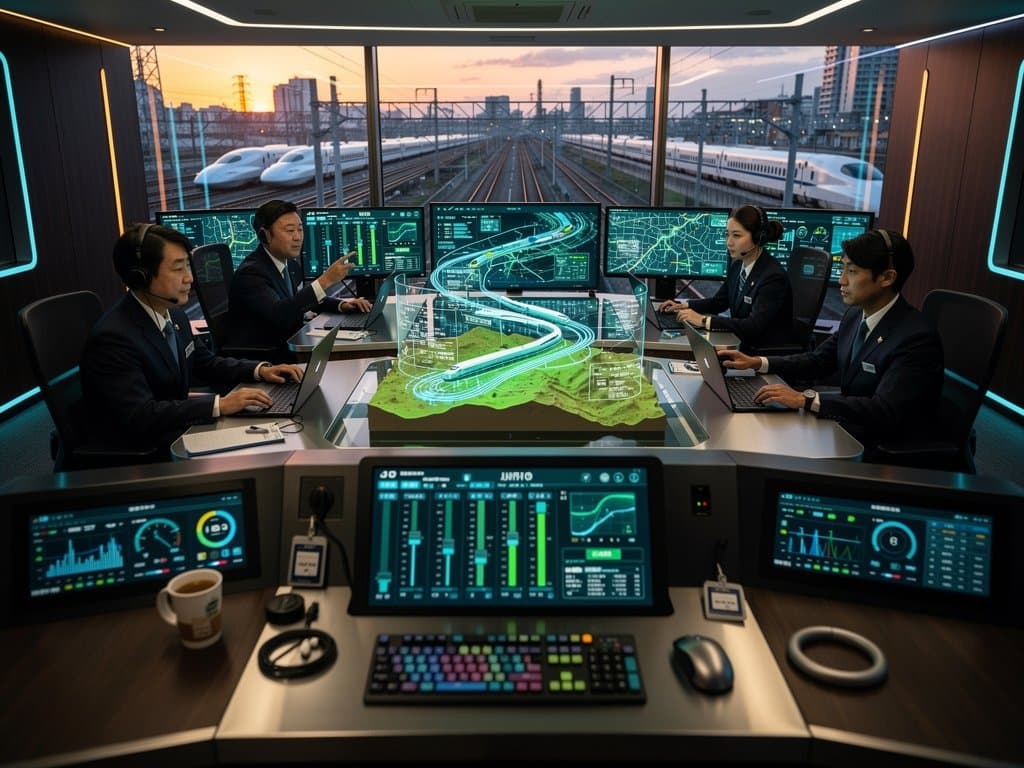
- 1. Japan railways hold 28% global passenger km share, 112x the US level.
- 2. JR East transports 4x more passengers than UK networks despite fewer residents.
- 3. Privatization, rivals, and ATC tech ensure 99.9% punctuality.
Japan railways command 28% of global passenger kilometers in 2024, per Works in Progress magazine. This share dwarfs France's 10% and the US's 0.25%, according to UIC data (2023). JR East carries 6.4 billion passengers annually, four times Britain's 1.6 billion despite a smaller population base, per its FY2023 annual report.
Eight private rail operators fuel competition. Dense urban populations require flawless transfers. The 1987 privatization of Japanese National Railways birthed the efficient JR Group structure.
Practical Guide: Japan Rail Travel Essentials
Getting There: International flights land at Tokyo Narita (NRT, Terminals 1-3) or Haneda (HND, Terminal 3). Take Narita Express for ¥3,070 ($20 USD, 60 minutes to Tokyo Station). Opt for Keisei Skyliner at ¥2,520 ($16 USD, 41 minutes), rates from JR East site (October 2024).
Costs: A 7-day Japan Rail Pass costs ¥50,000 ($330 USD) for unlimited JR travel nationwide, available at Japan Rail Pass official purchase page (October 2024). Tokyo to Kyoto Shinkansen one-way ticket runs ¥13,910 ($92 USD). Visit during spring cherry blossoms (March-April) or autumn foliage (October-November). US and EU passports enjoy visa-free entry for 90 days.
Access Notes: This reports independent experiences. Purchase eSIMs for ¥4,000 ($26 USD, 15GB data). Most stations provide free Wi-Fi. Women-only cars run on key lines during rush hours (7-9am, 5-7pm weekdays).
Budget Breakdown: Expect ¥5,000-10,000 ($33-66 USD) daily on rail pass share, meals, and local lines. Station-adjacent hotels include Ritz-Carlton Kyoto at ¥100,000 ($660 USD/night, 8-minute walk from Kyoto Station, ritzcarlton.com). Cerulean Tower Tokyu in Shibuya costs ¥30,000 ($200 USD/night) with direct rail access. Add ¥1,500 ($10 USD) for bento meals onboard.
JR East Scale Powers Rail Dominance
JR East leads as Japan's biggest operator after the 1987 privatization split. Its FY2023 annual report details 6.4 billion yearly passengers, exceeding UK networks via high density and competitive pressure from private lines.
Shinkansen trains hit 320 km/h speeds. Tokyo's eight private operators, such as Tokyu, manage suburban routes efficiently. Earthquake sensors stop trains in seconds, delivering 99.9% punctuality rates.
Near stations, morning markets pulse with energy. Fishmongers call out prices amid sizzling takoyaki griddles. Salty ocean breezes blend with diesel exhaust. At dusk, orange sunlight gilds platforms as salarymen clatter briefcases while boarding packed cars.
Competition Drives Efficiency Gains
Private firms electrified networks early, dodging the 1950s car culture surge elsewhere. Kintetsu Railway links Osaka to Nagoya for ¥1,240 ($8 USD, 40 minutes) and extends to Nara's ancient temples. Five operators connect Osaka, Kobe, and Kyoto without delays.
Trains dodge road congestion entirely. They deposit riders steps from hotels, freeing hours for Osaka's neon Dotonbori canals or Nagoya's historic castles. This setup saves travelers ¥2,000 ($13 USD) daily versus taxis or rideshares.
Tech Innovations and Financial Strength
Automatic Train Control (ATC) systems cap speeds precisely. Platform screen doors block falls. AI predicts maintenance needs. Drones scan tracks daily for defects, as outlined in JR East's FY2023 innovations summary.
JR East posted ¥2.84 trillion ($18.7 billion USD) revenue for FY2023. Passenger transport supplied 60% of funds. Real estate contributed 20%. These proceeds support maglev expansions targeting 500 km/h speeds by 2027, per the JR East annual report.
Step aboard a Shinkansen. Doors seal with a soft hiss in quiet green-class cars. Power sockets buzz as devices charge. Autumn maples streak past windows in golden hues. The engine's low hum drowns out conversation.
Financial Model Funds Future Rail Tech
JR Group's diversified income streams set it apart. Non-rail real estate around stations generates steady cash flows, funding tech upgrades without taxpayer aid. JR East invested ¥300 billion ($2 billion USD) in digital signaling last year alone, boosting capacity 15% (JR East FY2023).
Global peers like France's SNCF report lower margins at 5-7%, versus JR East's 12% operating margin. This edge sustains low fares and high speeds.
Plan 2026 Japan Rail Trips Now
JR passes beat domestic flights on time and cost. Tokyu lines speed access to Yokohama ports. Spring cherry blossoms line tracks vibrantly. Strike-free stations gleam with safety tech.
- Country: Japan · Rail Passenger Km Share: 28% · Source: Works in Progress (2024)
- Country: France · Rail Passenger Km Share: 10% · Source: UIC (2023)
- Country: Germany · Rail Passenger Km Share: 6.4% · Source: UIC (2023)
- Country: USA · Rail Passenger Km Share: 0.25% · Source: Works in Progress (2024)
View JR East Shinkansen routes. Japan railways offer a blueprint for efficient global travel infrastructure.
Frequently Asked Questions
Why do Japan railways outperform global peers?
Japan railways claim 28% passenger km share through JR East scale and private competition. Density achieves 4x UK volume, per Works in Progress (2024).
How did privatization boost Japan railways?
The 1987 split formed JR East, now handling 6.4 billion riders yearly versus UK networks (JR East FY2023).
What tech ensures Japan railways punctuality?
ATC speed controls, AI maintenance, platform doors, and drones achieve 99.9% on-time rates (JR East FY2023).
How to travel Japan by rail practically?
Secure ¥50,000/$330 USD 7-day JR Pass (japanrailpass.net). Tokyo-Kyoto Shinkansen costs ¥13,910/$92 USD. Time trips for spring or autumn.