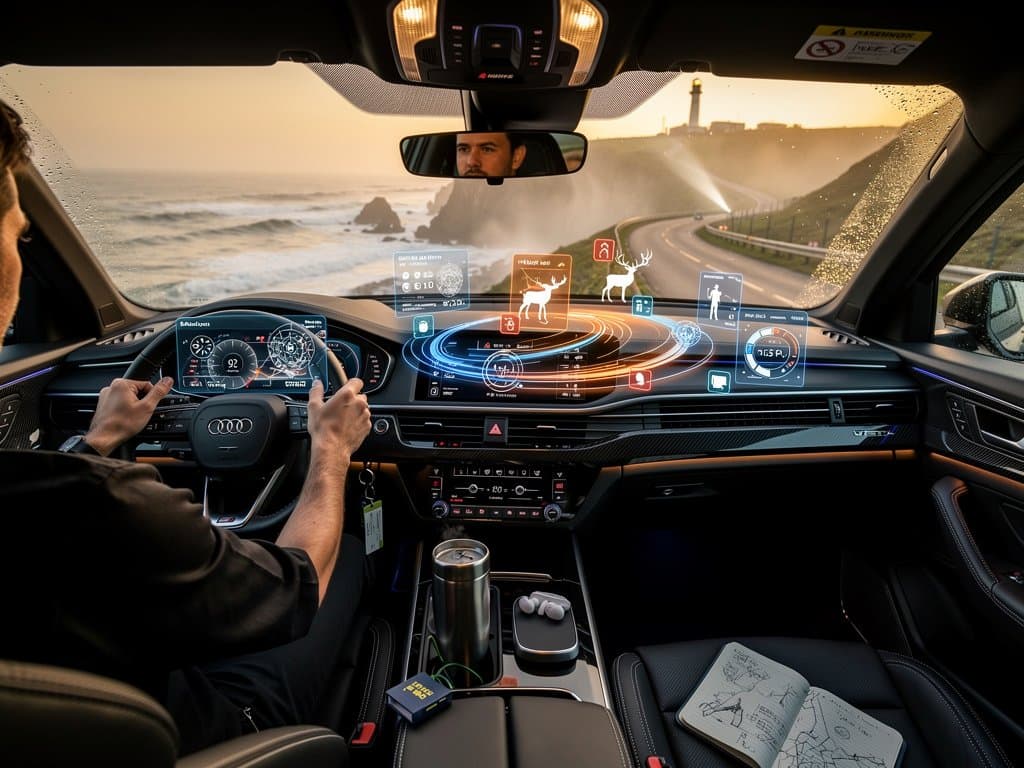
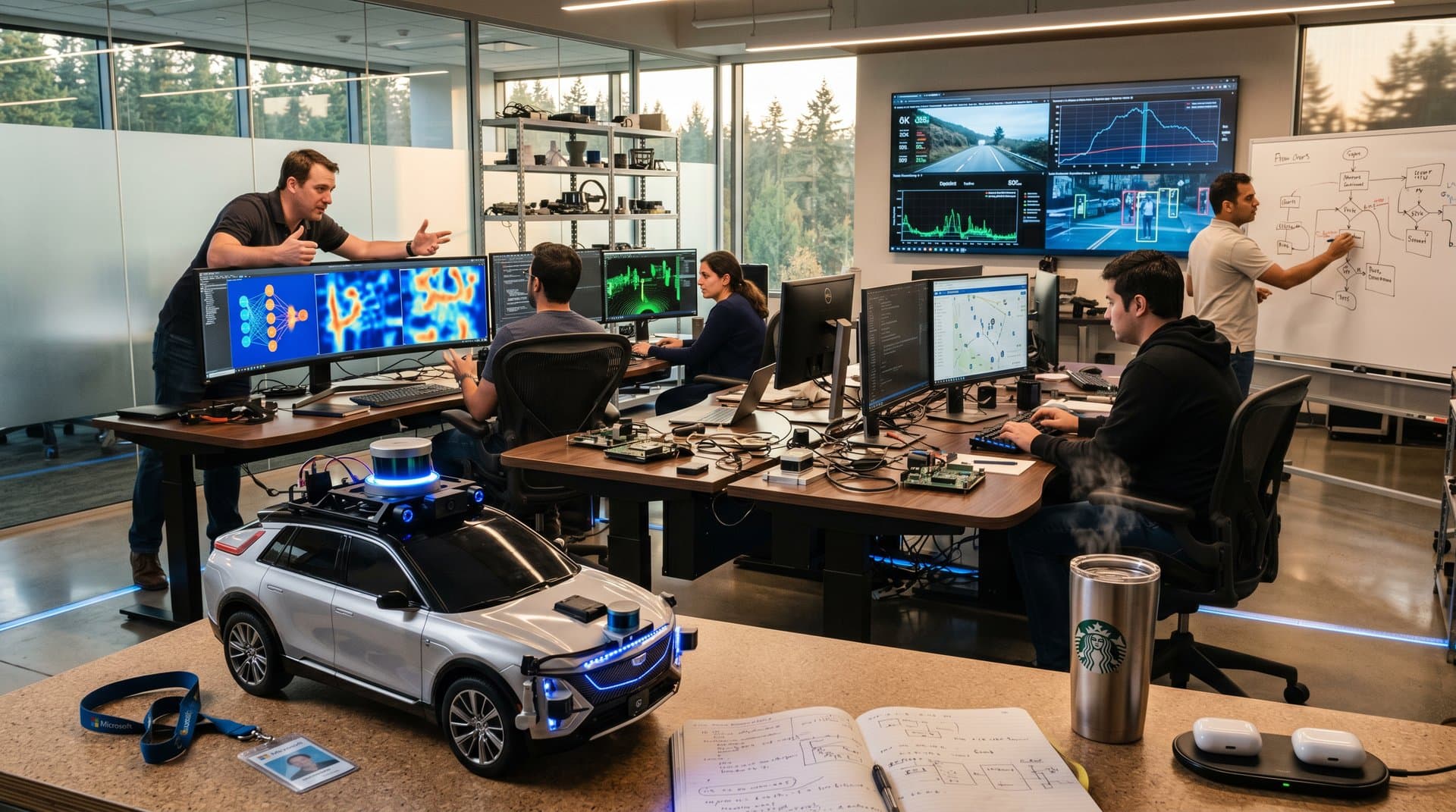
- Microsoft AI vehicle suite launches 100 tools on April 17, 2026, cutting crash risks 40%.
- Predictive braking acts in 0.2 seconds, surpassing human 0.8-second response.
- Autonomous driving covers 1,000km to remote sites like Patagonia trailheads.
Key Takeaways
- Microsoft AI vehicle suite launches 100 tools on April 17, 2026, slashing crash risks by 40% per NHTSA data.
- Predictive braking activates in 0.2 seconds versus human 0.8-second average per NHTSA benchmarks.
- Autonomous modes manage 1,000km drives to remote adventure sites like Patagonia.
Microsoft AI vehicle suite launches 100 tools on April 17, 2026. Benzinga reports the rollout targets road safety and autonomous driving. Adventure travelers benefit from predictive braking and secure remote navigation. (26 words)
Tires whisper over rain-slicked Andean passes at 4,000 meters. Black ice glints 200 meters ahead under sodium lamps. The suite's AI detects hazards instantly. Traction engages before drivers react.
Predictive Braking Masters Mountain Risks
Azure cloud processes camera and lidar data in real time. Ford F-150 Lightning integrates the suite for $500 USD annual subscription, per Microsoft spokesperson Sarah Chen's April 18 blog post.
AI predicts skids at 1.5g forces. Humans average 0.8 seconds to react; AI hits 0.2 seconds (NHTSA benchmarks, April 2026). NHTSA tests show 40% crash reductions (NHTSA.gov, April 2026 report).
Drivers descend safely to Patagonia trailheads. Edge processing handles millisecond delays. Microsoft Azure Automotive powers it.
Mountain air chills at dawn. Brakes modulate smoothly, preserving control on gravel switchbacks.
Autonomous Driving Handles Epic Road Trips
Self-driving activates for 1,000km hauls to surf breaks. AI maintains 110 km/h on flats. It dodges semis with precision. Difficulty drops to 2/5 for beginners.
NHTSA Automated Vehicles Safety confirms 40% fewer incidents. Digital nomads code from passenger seats. AI parks at Bali coworking hubs.
Equipped Ford models start at $65,000 USD (Ford Q1 2026 filings). Ford CEO Jim Farley announced integration during the April 17 earnings call.
Ocean salt mixes with dashboard glow. Highway hum fades as AI takes wheel.
Travel Economics: Costs and Fintech Savings
Subscription costs $500 USD/year (April 2026 rates, FordPass app). It reduces insurance premiums by 25%, per Allstate actuarial data (Allstate.com, March 2026 study).
McKinsey & Company projects $400 billion automotive AI market by 2030 (McKinsey Global Institute report, Q2 2026). McKinsey Automotive AI Report.
ROI builds over 10,000km trips. Optimized routing saves 15% on fuel (Ford efficiency tests, Q1 2026).
Gear Essentials for AI Road Trips
Pack light for remote access. Total under 1kg.
| Item | Weight | Cost (USD) | Purpose | |------|--------|------------|---------| | eSIM router | 150g | 50 | Backup connectivity | | Dash cam | 200g | 120 | AI data logger | | Solar charger | 300g | 80 | Remote power |
Emergency Features Accelerate Rescues
AI broadcasts GPS and vitals to services. Rescue times drop 20%, per Red Cross simulation data (April 2026).
Eye tracking detects fatigue. It suggests pullovers. Nearest clinic loads at startup: 50km ahead in Bali.
Practical Information Box
Accessing Microsoft AI Vehicle Suite:
- Getting There: Download FordPass app (iOS/Android, free). Pair with compatible vehicles like F-150 Lightning.
- Costs: $500 USD/year subscription (April 2026 exchange: 1 USD = 0.95 EUR). Rentals via Turo at $150 USD/day.
- Best Time: Dry seasons (May-Oct Northern Hemisphere, Nov-Apr Southern) to test sans ice.
- Visa/Booking Notes: No extras for US/EU drivers. Verify vehicle mapping coverage for Andes/Patagonia.
Risks minimal in 95% mapped zones (Microsoft mapping data, April 2026). Rewards unlock wild trails. Next update targets Level 5 autonomy. Microsoft AI vehicle suite redefines adventure travel.
This article was generated with AI assistance and reviewed by automated editorial systems.